

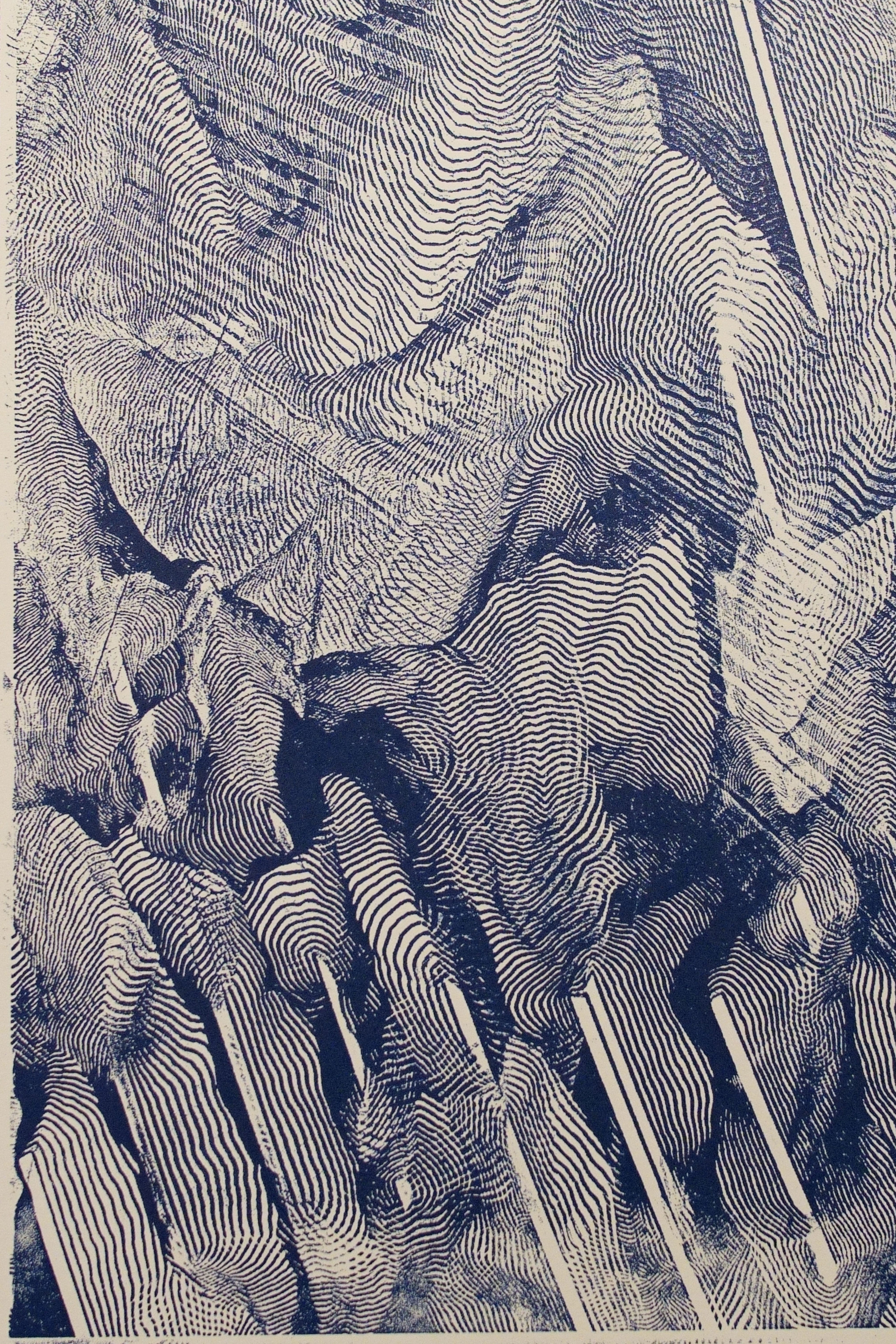
In Part 2 we took the captured frame through upscaling and vectorization and watched it become ink on paper via the AxiDraw and Risograph. This time the destination is different. The file goes to a laser, the laser goes into wood, and the wood goes to a Vandercook letterpress. Relief printing; one of the oldest printmaking methods, driven by a generative system built in software.
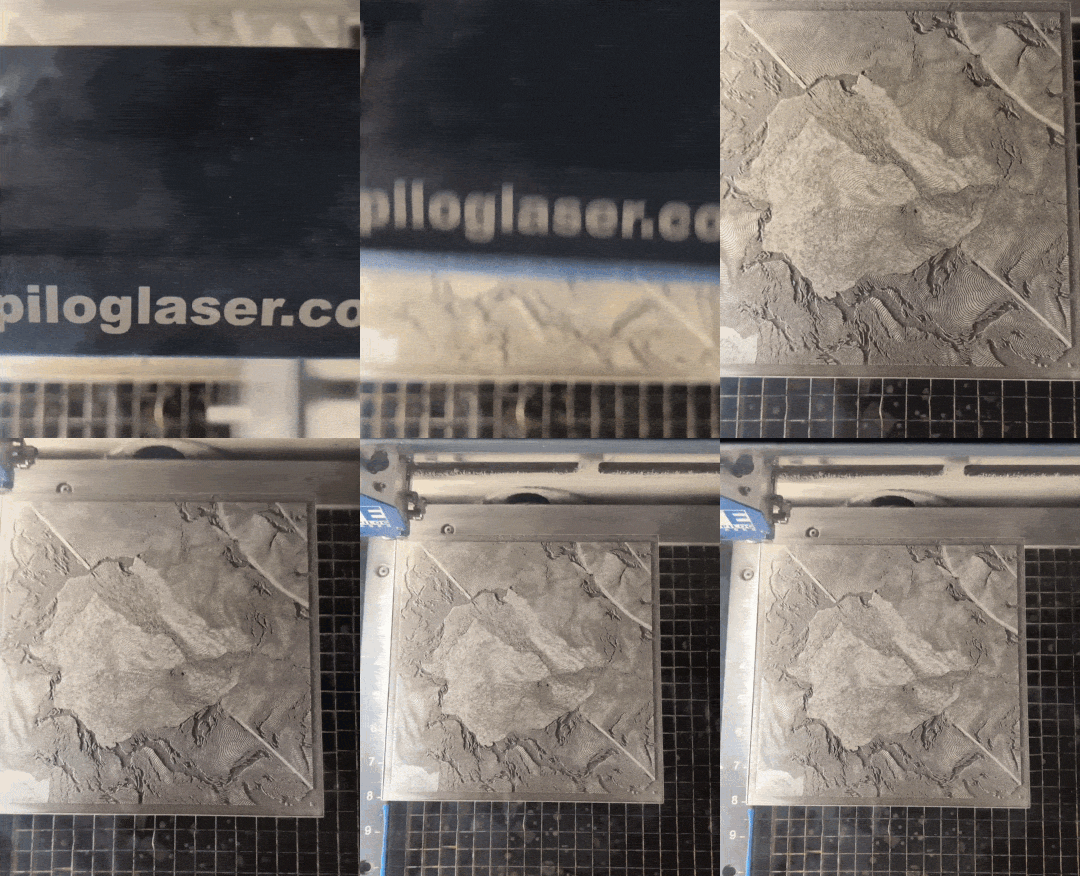
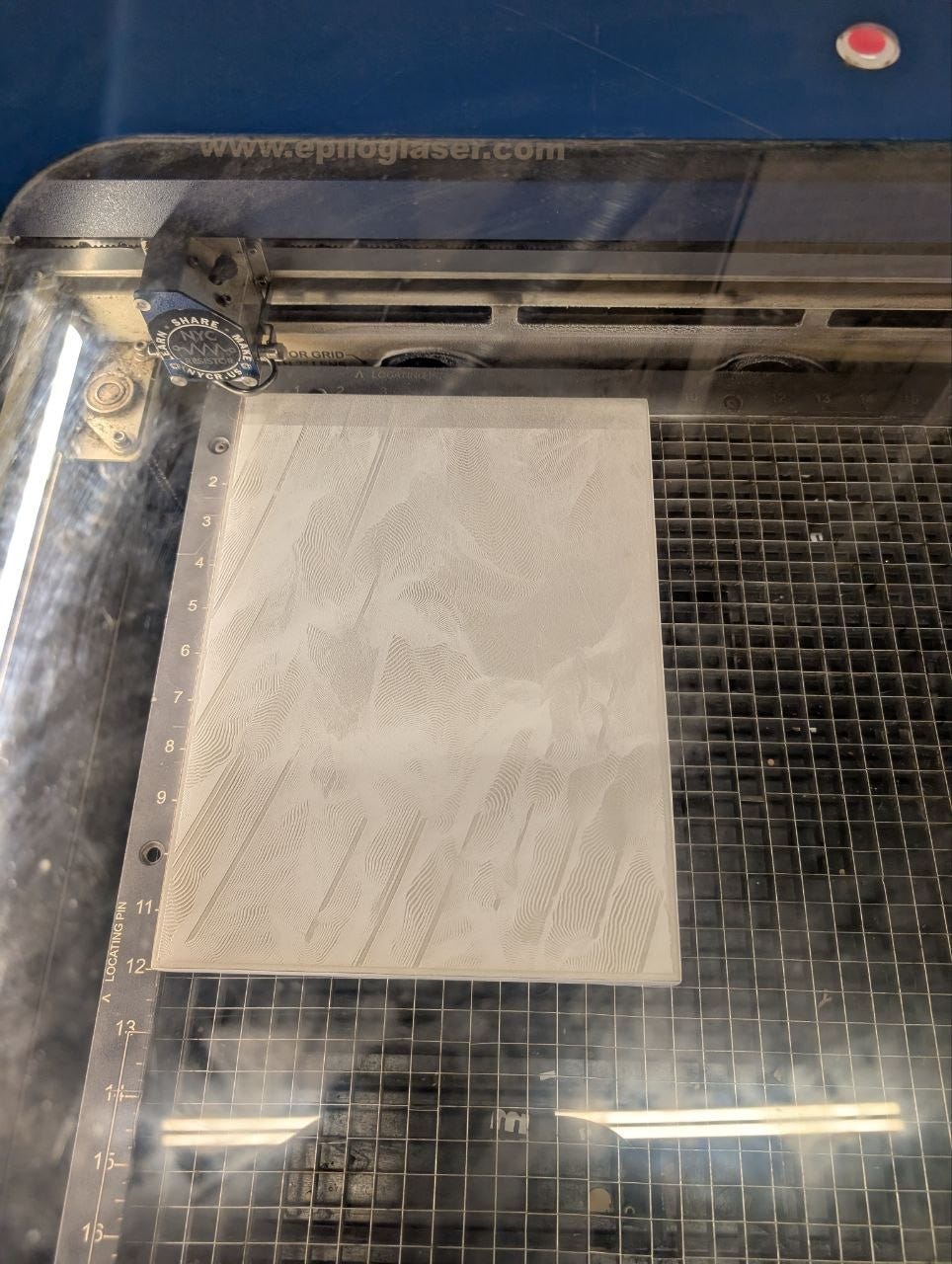
All these block were made @ NYCResistor using the Epilog Fusion 60 watt CO2 Laser with prints being made at Center for Book Arts in addition to NYCResistor.
Scoring the Surface
The blocks are cradled or framed wood panels made for painting rather than traditional woodblock stock. The extra thickness is not incidental; it is necessary. Printing on a Vandercook letterpress requires materials to be type high, a measurement inherited from centuries of moveable type. The panels sit just at the right height with a sheet of paper shimmed under the frame.
Before the laser fires the image has to be inverted. What the feedback system generates as a bright line becomes a valley in the wood; what was dark becomes the surface that holds ink. The inversion is a translation; positive to negative so that when ink meets paper the image returns.
Engraving requires around three passes to achieve enough depth for the ink to transfer cleanly. This is where things get strange. The differences in depth are measured in fractions of a millimeter yet the Vandercook reads all of them. One block was paused within the first few minutes of engraving and restarted from where it stopped. The job looked correct when it came off the laser. The print told a different story; a faint but unmistakable line running across the image exactly where the pause happened. The press found a difference the eye could not.
Filling the Frame
Because the panels are framed on the back there is a recessed area behind the printing surface. On the first pull the rollers pushed that empty area down and the inking came out uneven across the block. The fix was simple once understood; additional wood blocks cut to fill the recessed area so the entire back of the panel sits flush against the press bed. A problem that announces itself exactly once.
Ink on Wood on Paper
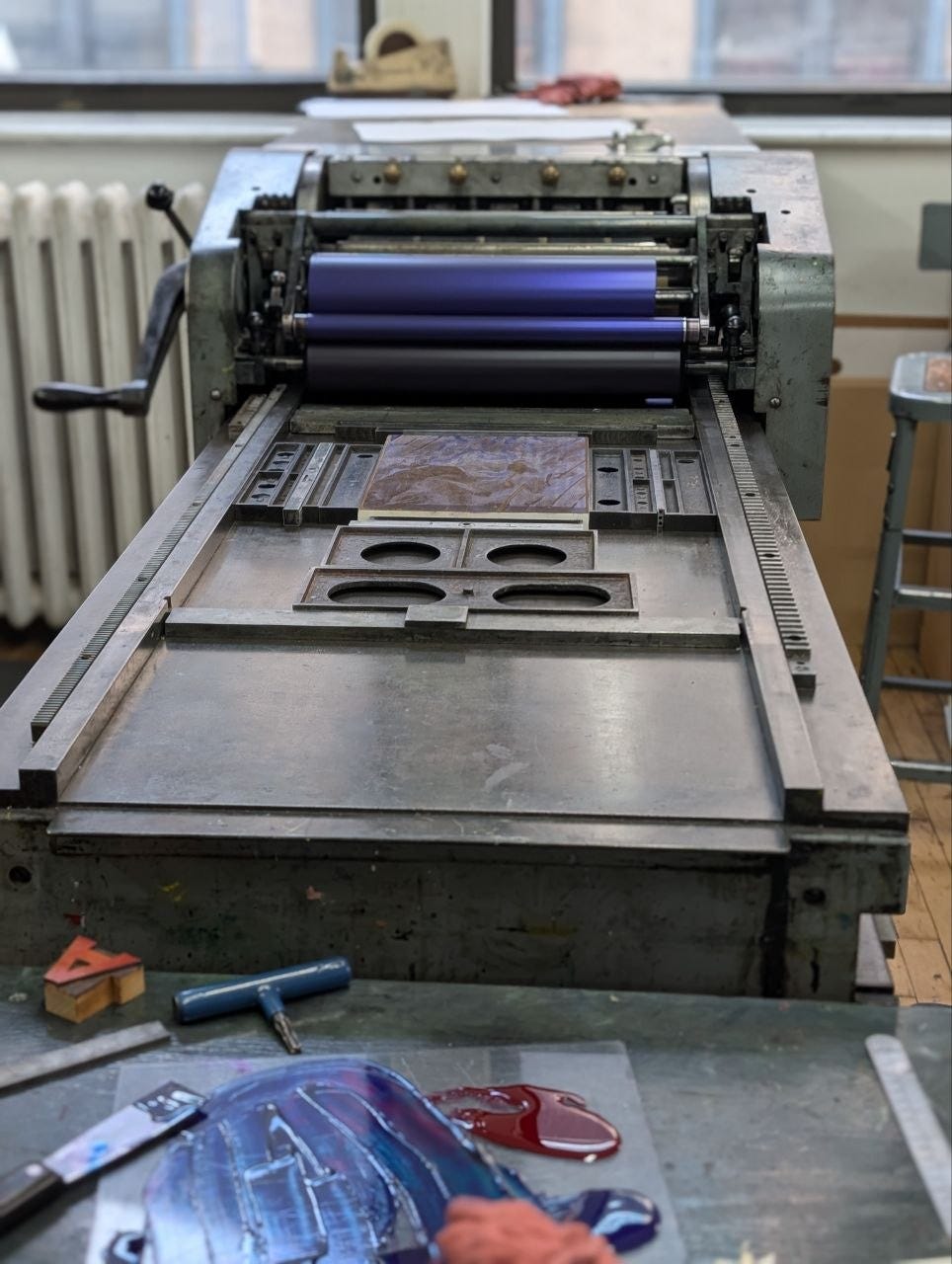
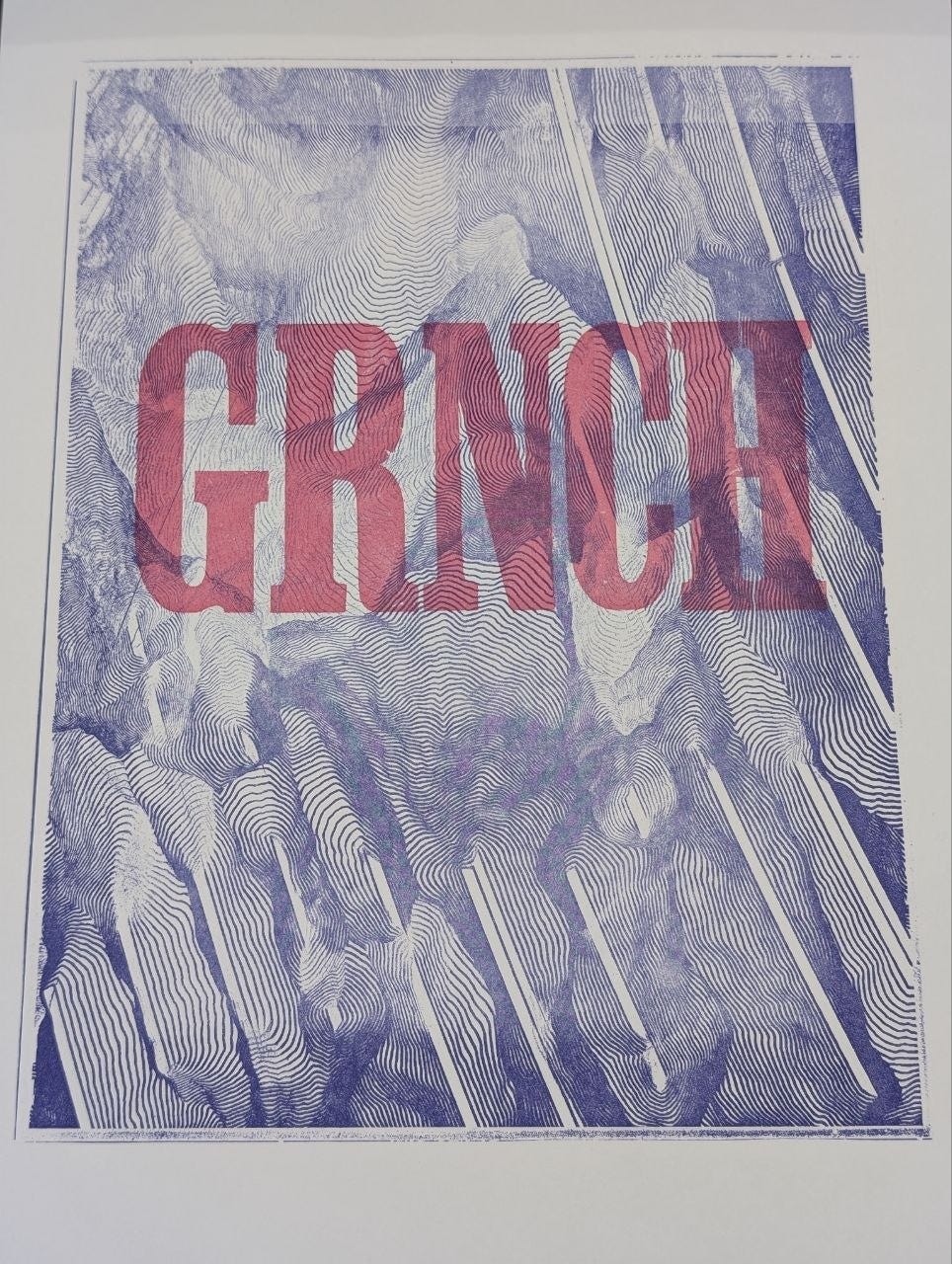
The Vandercook is a proof press; designed for checking type before a full print run. It is precise, slow, and unforgiving. Running a laser engraved woodblock through it is not what it was designed for but the registration is clean and the pressure is controllable in ways that matter when your matrix is a feedback generated landscape burned into a painting panel.
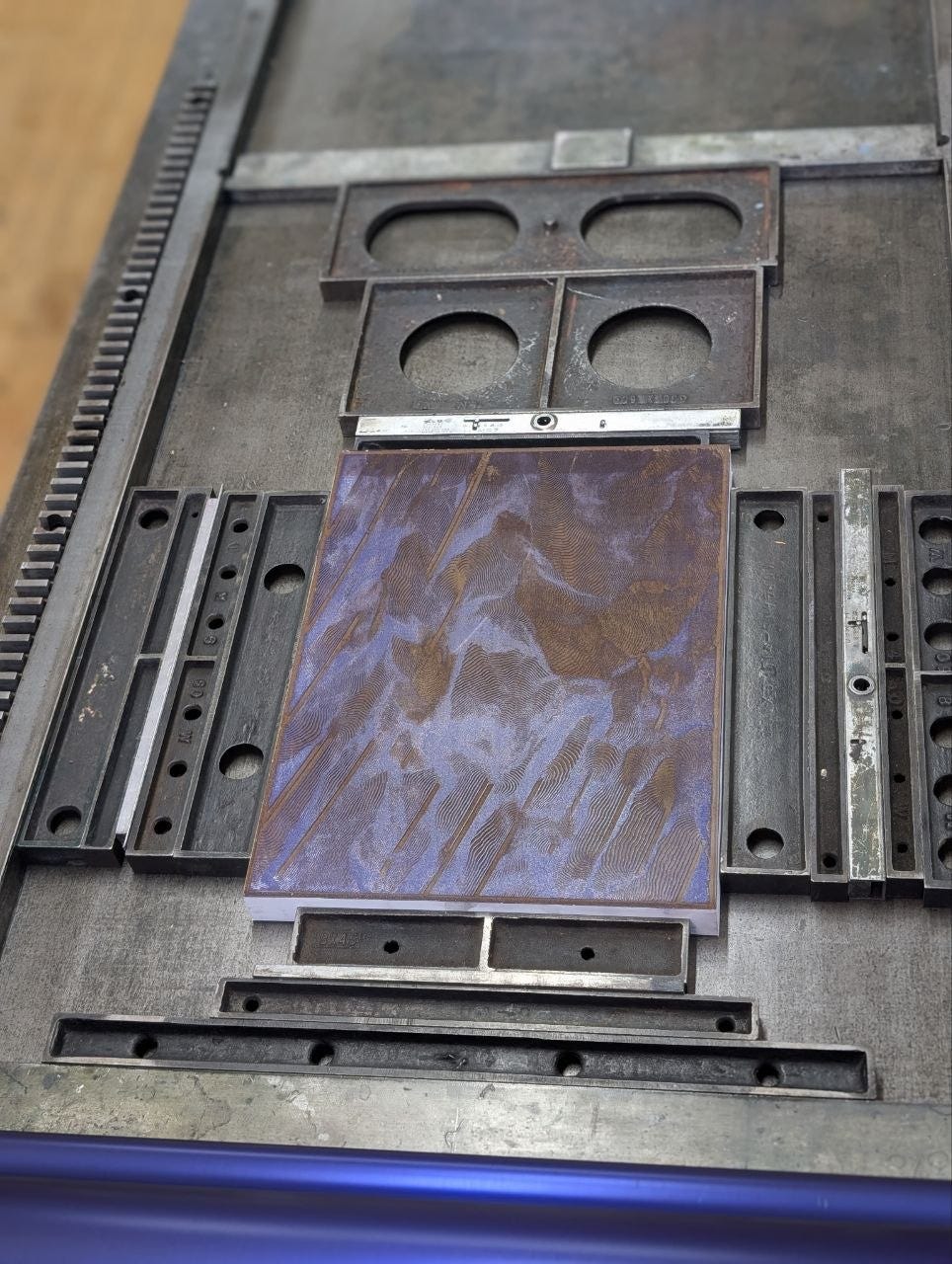
What comes off the press is the end of a long chain. A mathematical system generates forms. A feedback loop accumulates them. An AI upscaler sharpens them. A vectorizer traces them. A laser burns them into wood. A press transfers them to paper. At every stage something is lost and something is gained. The print is not the image on the screen. It is what survived the translation.
The woodblock prints shown here are part of the Above the Clouds series.


